The two content mistakes that kill TikTok Shop performance in month one
Mistake 1: The brand content trap
Most brands have spent years building a clear visual identity. Strong photography. Polished campaigns. Brand guidelines that hold up across every channel.
That discipline builds great brands.
It also produces content that TikTok's algorithm deprioritizes and users scroll straight past.
When you show up on TikTok with high-production brand content, the kind that looks and feels like an ad, the platform reads it correctly and treats it accordingly. Lower organic reach. Higher CPM on your Spark Ads. Audiences that don't stop.
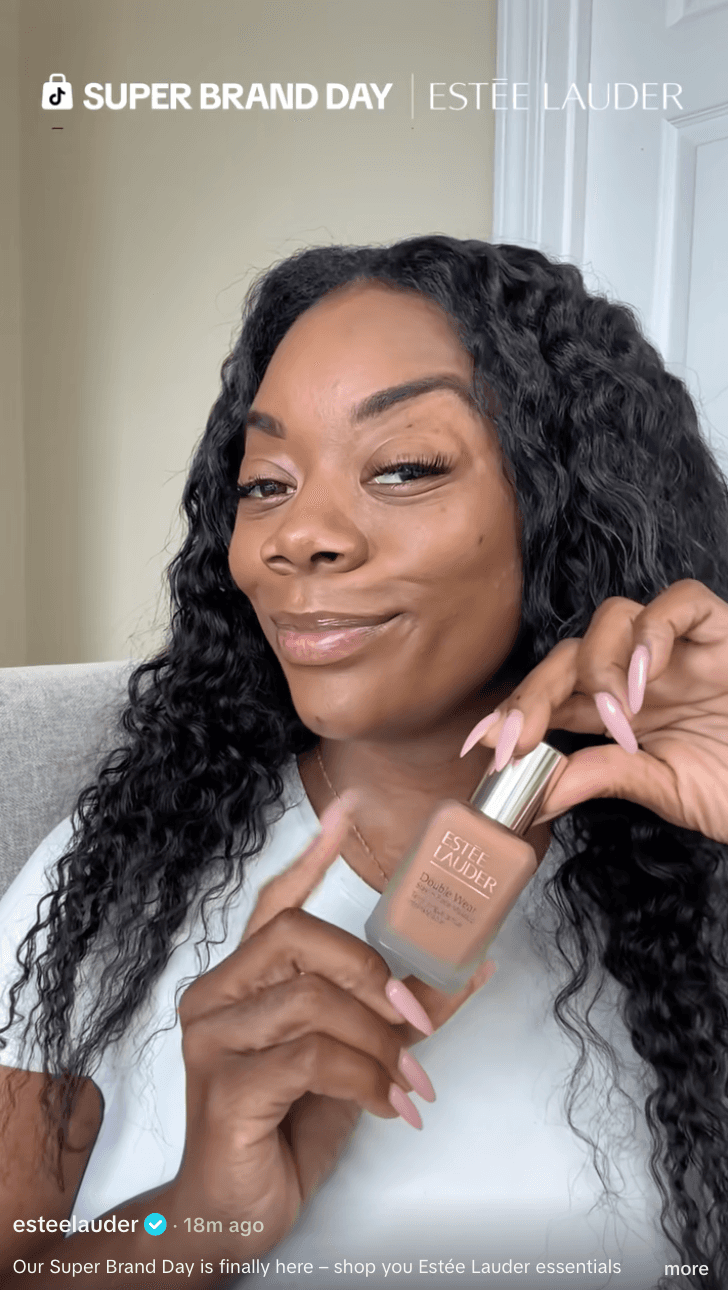
Estée Lauder learned this the hard way. In late 2023, Glossy reported that the company had been "slower than its competitors to embrace TikTok to reach younger consumers." Their initial TikTok Shop approach leaned into what they knew: a creative studio set, professional hosts, polished livestream production. It looked excellent. It underperformed. Meanwhile, their more affordable stablemate The Ordinary, filming from real store locations with actual employees as hosts, was building a TikTok community of 1.3 million followers and outperforming on the platform. The difference wasn't budget. It was authenticity. TikTok audiences can tell when a brand is performing. They reward realness.
Estée Lauder is sold in every Benelux perfumery, department store, and beauty retailer. The challenge isn't brand recognition. It's learning a completely different content grammar.
Mistake 2: The product listing trap
The other extreme is just as common and just as fatal.
Brands upload their catalog. Product shots. Spec sheets. Prices. Then wait for the algorithm to deliver customers. Nothing happens, because nothing was given a reason to happen.
TikTok is a discovery engine. 1 in 2 TikTok users discovers new products or brands while simply scrolling. But that discovery happens through content, not through listings. A product image in the Shop Tab doesn't start the scroll. A video that makes someone feel something, before they've decided to buy, does.
CeraVe is the clearest proof of this principle anywhere in the beauty industry. When TikTok influencer Hyram Yarbro began recommending the brand in 2020, CeraVe products sold out globally, without CeraVe producing a single piece of TikTok content themselves. L'Oréal's own CMO later noted that TikTok had accelerated CeraVe's growth by roughly two years, reaching targets they'd set for 2022 by early 2020. The L'Oréal Active Cosmetics Division (which includes CeraVe) reported over 40% growth in the period. Not a single product listing drove that. It was creator content: genuine, recommendation-driven, community-trusted. CeraVe is sold in Kruidvat and Etos across the Netherlands and Belgium. Their TikTok story was built entirely before TikTok Shop existed. Now that TikTok Shop is live in Benelux, the checkout just closes a loop that creator content already opened.
The content formula that actually converts
TikTok's own data is direct about this: shoppable videos convert at 5x the rate of classic display ads. But only when they're structured correctly.
The formula is not complicated. It just runs counter to how most brand marketers have been trained to think.
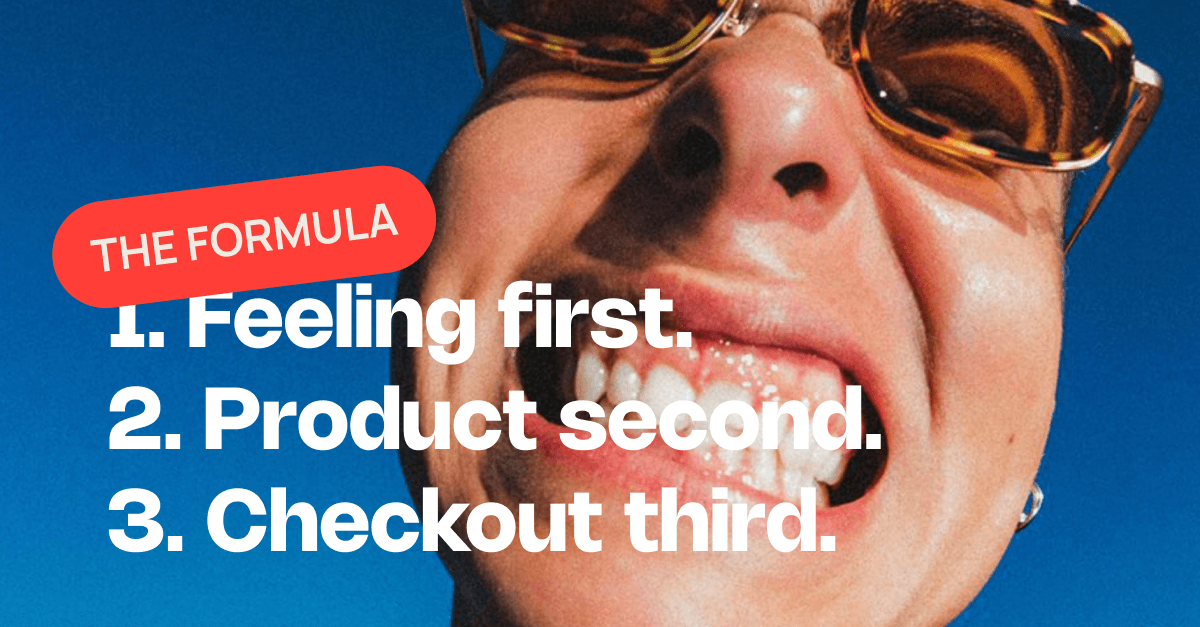
Feeling comes first. Product lives inside it. Checkout comes third.
Not "here is our product." Not "buy this now." Instead, show something worth watching: a genuine moment, a recognizable problem, a satisfying result and let the product be the reason it worked.
The Ordinary gets this right. Sold at ICI Paris XL, Douglas, and Bol.com across the Benelux, it's a brand that could easily default to clinical, ingredient-led content. Instead, their TikTok presence is creator-first: real people showing real skin, using products in real routines. Their LIVE Shopping sessions are hosted from actual store locations by actual employees, not polished presenters on a branded set. It feels like a conversation, not a commercial. And it works: according to Glossy, The Ordinary has built one of the strongest beauty brand followings on TikTok, with 1.3 million followers and a creator affiliate program with tens of thousands of participants.
This is the content formula in one sentence: make something worth watching, and put your product inside it.
The four content formats driving TikTok Shop sales
1. Shoppable video. Your always-on foundation.
Short videos (15–60 seconds) where products are tagged directly. One tap takes the viewer from the video to the product page. One more tap to checkout.
The critical point: they need to look organic. Not like ads. Natural light, real voice, real setting. When a shoppable video feels like content instead of advertising, the algorithm rewards it with reach and viewers reward it with purchases.
This is your always-on layer. You need it running continuously, not in campaign bursts.
2. LIVE Shopping. The highest-converting format most Benelux brands are ignoring.
LIVE Shopping is the format generating the most significant results in markets where TikTok Shop has already been running.
Charlotte Tilbury is the textbook case. Sold at Douglas and ICI Paris XL across the Benelux, they were among the first luxury beauty brands to take TikTok Shop LIVE seriously. For a two-hour Black Friday LIVE session, promoting five bundles only available via TikTok Shop, they drew over 65,000 viewers. No paid media. A two-hour window. One creator. 65,000 people watching and being able to buy in two taps.
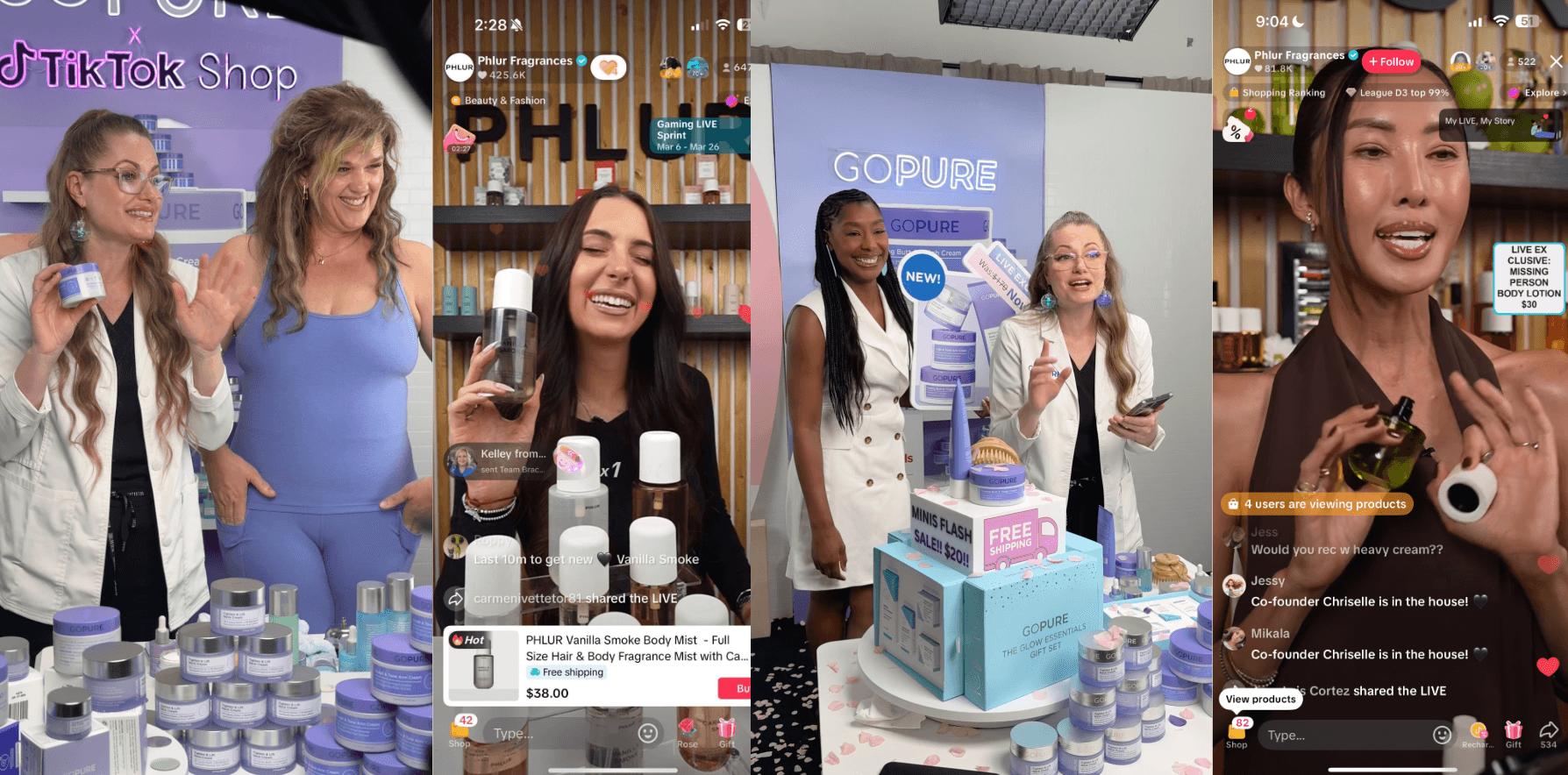
The mechanism isn't complicated: a LIVE session is live TV with a buy button. But the execution has to feel earned. Viewers ask questions. They see the product in real conditions. They get social proof in real time from other viewers. That combination converts better than any static ad format.
The brands building LIVE capability now during the first months of TikTok Shop in the Benelux will own a format that most competitors haven't figured out yet.
3. Creator affiliate. Where most Benelux brands will underinvest.
75% of TikTok users find creator content believable. 71% say creator authenticity motivated them to buy.
These numbers explain something important. A creator with 20,000 followers making a genuine product review will consistently outperform brand content with a €50,000 production budget. Because the audience trusts the creator. Not yet the brand.
In markets where TikTok Shop has been active for 12+ months, the data is stark: 87% of top TikTok Shop beauty revenue flows through creator affiliates, not brand-produced content.
That means the question isn't whether to use creators. It's how to structure it. Two documented approaches show the trade-off:
Tarte Cosmetics runs an open affiliate program: any creator can link to products and earn commission. The result: volume, scale, content from thousands of creators who each bring their own audience. Tarte saw a triple-digit halo effect on in-store retail sales for products featured in TikTok Shop sales going up in Sephora and other retailers simply because products had been seen on TikTok Shop. Their 12-hour Black Friday LIVE averaged 25,000 viewers, with 70% of buyers being people who had never followed Tarte before.
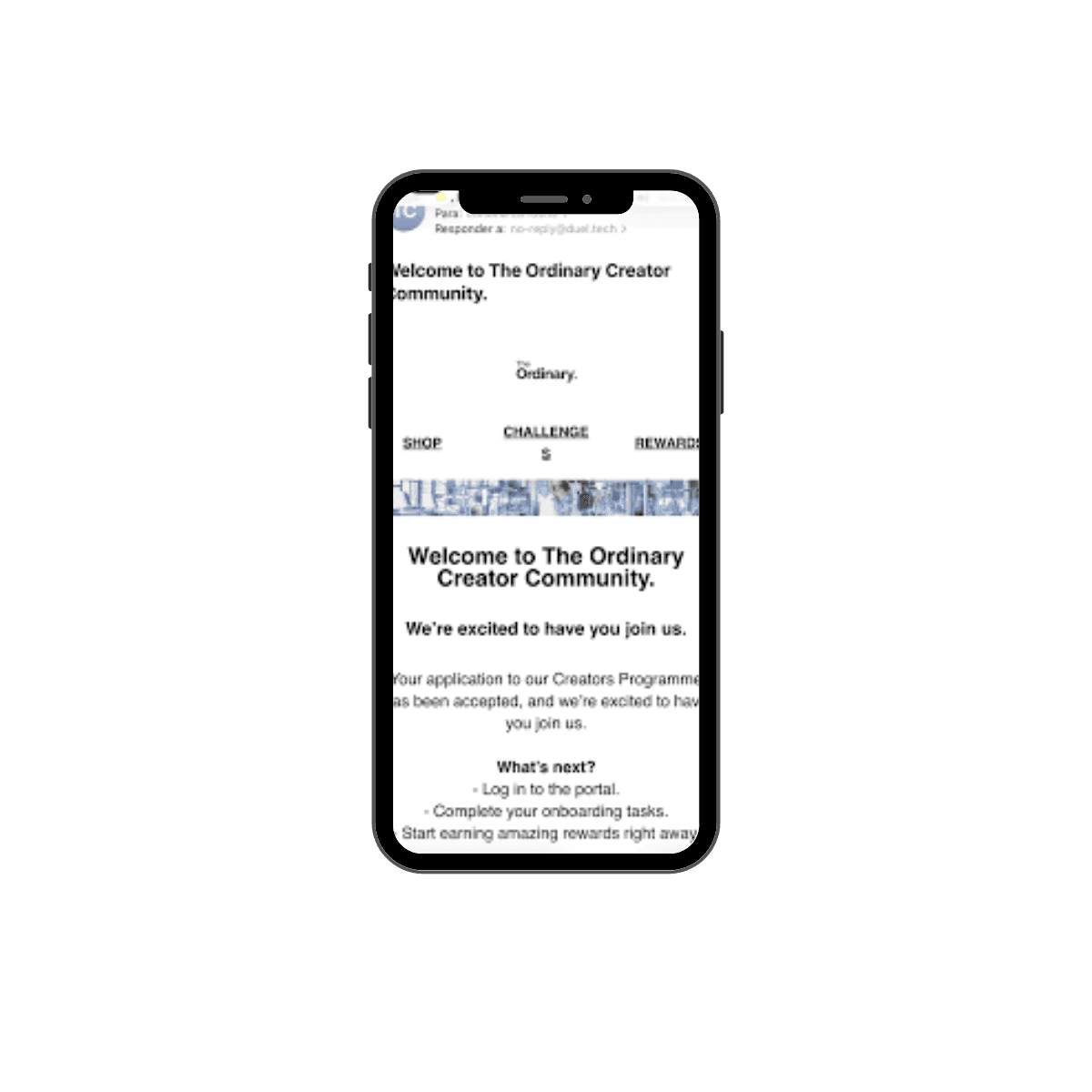
The Ordinary takes the opposite approach, a gated program where creators apply and are reviewed before they can earn commission. This protects brand integrity and ensures only credible, category-relevant voices represent the brand.
Both approaches work. The best Benelux brands will combine them: a small group of hand-picked creators briefed at a custom rate (what we call the Target Plan), combined with an open affiliate model where any eligible creator can request samples and post (the Open Plan). Volume through openness. Quality through curation.
4. Brand organic. Not every video needs a buy button.
Some of the most effective TikTok content for commerce doesn't ask for the sale at all.
Behind-the-scenes of how a product is made. A founder talking about why they started. A piece of content that builds trust before it earns it.
Uniqlo didn't engineer their bag going viral. A creator showing how to style it created a worldwide demand spike and cleared stock globally. You can't manufacture that. But you can create the conditions for it: an active TikTok presence with consistent brand organic content is how you stay present in the algorithm while your affiliate program builds momentum.
The most expensive creator mistake brands make
Most brands approach creator selection the same way they approach media buying: by reach. Biggest audience. Best deal.
That's the wrong metric for TikTok Shop.
Credibility converts better than scale. A creator with genuine authority in a specific category will convert their audience at a far higher rate than a mega-influencer who posts about everything. On TikTok Shop, you're not buying reach. You're buying trust and trust is built in niches, not on mass platforms.
The practical consequence: don't overlook micro-creators (10K–100K followers) who have built real communities around categories relevant to your product. Their conversion rates consistently outperform accounts ten times their size. CeraVe's most powerful TikTok advocates weren't celebrities, they were dermatology creators with deeply engaged niche audiences.
What to actually do in month one
Month one is not about going viral. It's about building the foundation that makes going viral possible and makes you able to handle it when it happens.
Pick the right products. Start with a minimum of 5. Choose the ones with a clear visual story: products you can show doing something in under ten seconds. Aim for at least 35% margin. You need room for creator commissions, platform fees, and promotions. Products under €50 are harder to make profitable at scale.
Send samples constantly. Target at least 10 per week. The more creators have product in hand, the more content gets made. You cannot brief your way to scale. You have to seed it.
Film before you launch. Get at least one shoppable video live on day one. Not a campaign video. Something that looks like it was filmed by someone who genuinely uses the product. Natural light. Real setting. Talking to camera.
Keep stock ready. One video going viral can spike your sales overnight. A lot of brands get their first TikTok Shop win and immediately go out of stock. That's a preventable problem.
Don't judge week one. The algorithm needs data. The affiliate program needs time to build creator momentum. The brands that quit after three slow weeks miss what was coming in week five.
The window that's open right now
TikTok Shop Belgium and the Netherlands launched June 15th. The creator network is being built right now. The algorithm is learning which products and content types perform. Benelux audiences have spending intent but haven't formed brand loyalties on the platform yet.
That's an unusual window.
It won't last. In the UK, where TikTok Shop launched in 2023, TikTok Shop hit 27 items sold per second on Black Friday 2025, with LIVE shopping sales up 68% year-on-year. Early movers built creator networks and content libraries in the first months that are now extremely difficult to compete with. The Benelux market is open. The starting line is the same for everyone. For now.
The brands that win won't have the biggest production budgets. They'll be the ones who understood the content formula early and backed it with the right creators, the right products and enough patience to let the flywheel build.
Not sure if your brand is ready for TikTok Shop?
We built a quick test: 10 questions, instant result, so you can find out before you commit.
Take the TikTok Shop Fit test →
Or talk to us directly about your launch. As one of the only agencies in the Benelux certified as both TikTok Shop Seller Agency and Creator Agency, we run the full picture: shop setup, creator recruitment, shoppable content and performance media.