From keywords to intent: the clustering shift
If you're still building SKAGs, you're losing data to granularity. That was our old way. One keyword, one ad group, one ad copy. It worked when Google needed you to tell it exactly what to match.
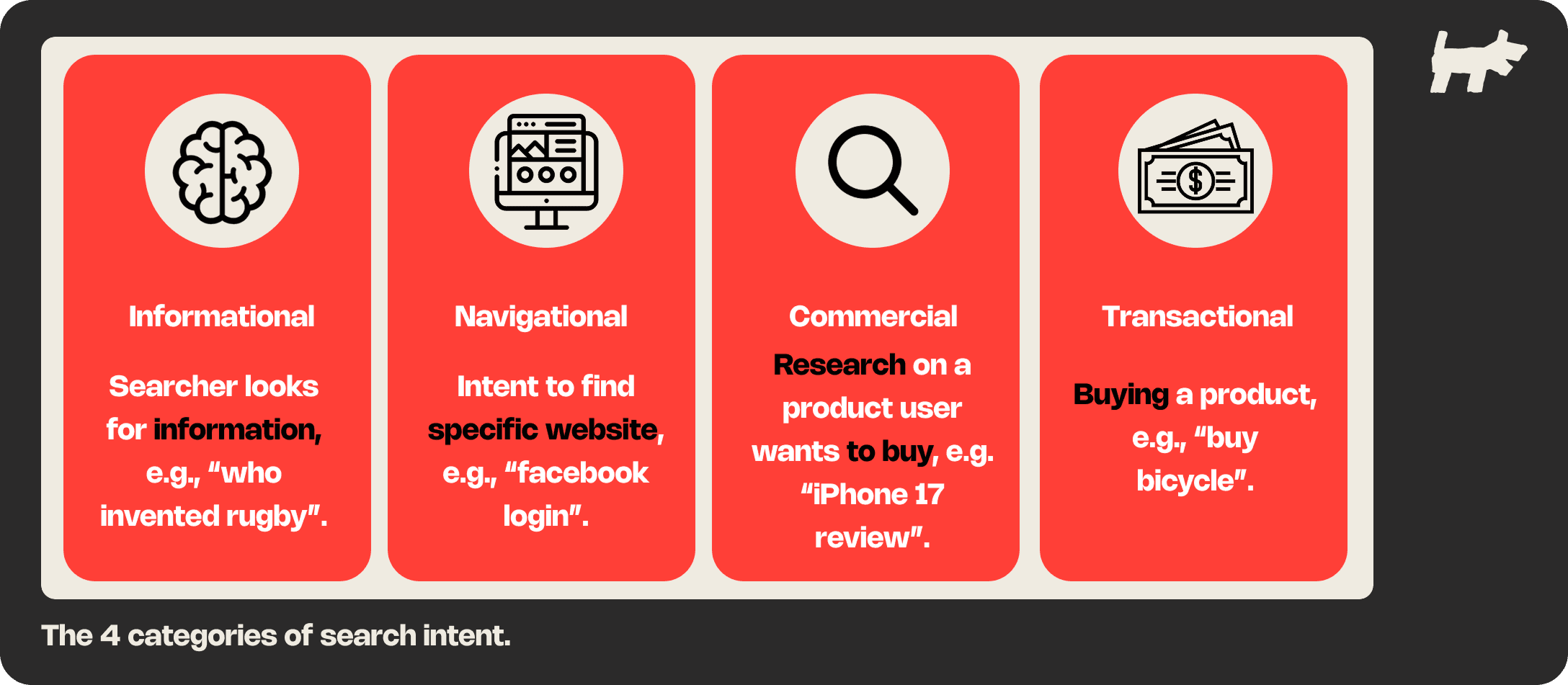
We build single intent ad groups now, not single keyword ad groups. Somebody searching "online marketing services" and somebody searching "digital marketing agency" are asking the same question with different words. Split them into two ad groups and you halve the data each one learns from. The bidding algorithm gets dumber on both sides.
Cluster by intent instead. Our rule of thumb is simple. If you Google both terms and the top results look the same, if the CTRs in your account are comparable and if common sense says these people want the same thing, they belong in one ad group.
"The more data Google has, the better it works. Granular structures starve the algorithm."
This isn't theoretical. On accounts where we migrated from single keyword to single intent ad groups, bidding efficiency picks up within the first month. The conversion signal finally has enough volume per group to be useful.
Where AI Max works, and where it still breaks
AI Max is Google's answer to the conversational query explosion. It stops matching on exact words and starts matching on intent. We've been running it across our book for most of the last year. Two patterns are clear.
AI Max works when you have two things: a meaningful budget and a B2C context. E-commerce, consumer services, anything where the user intent is broadly shoppable. The long tail queries that used to be invisible start converting because Google can match "comfortable blue trousers for a wedding" to your product catalog without you ever having written that keyword.
AI Max still breaks in B2B. The mechanism is keyword bleed between B2B and B2C intent.
Picture a company selling B2B IT infrastructure. Full Microsoft stack rollouts. Enterprise licensing. 6 figure deals. Turn AI Max on and it starts serving your ads to people searching "Microsoft Teams download." Same brand keyword. Completely wrong audience. Budget evaporates against consumer searches that will never convert.
The algorithm can't yet tell a B2B buyer from a consumer. Until it can, B2B accounts need tighter guardrails. Or they stay on classic search.
The 4 to 6 week learning window
One warning if you're going to test AI Max. Give it time. The model needs 4 to 6 weeks to learn and that lead time is the same whether your monthly budget is €30k or €3M. The worst thing you can do is start it, watch two weeks of noisy data and kill the campaign before the model has seen enough conversions to optimize. That's how accounts get a bad first impression of AI Max and miss the upside.
The controls Google pulled away, and the ones you still have
Google has been quietly pulling levers off the SEA dashboard for years. The official story: making advertising easier. The other half of the story: fewer controls means more queries matched, which means more spend. More people spending more money with less oversight. It's a business decision dressed up as a usability decision.
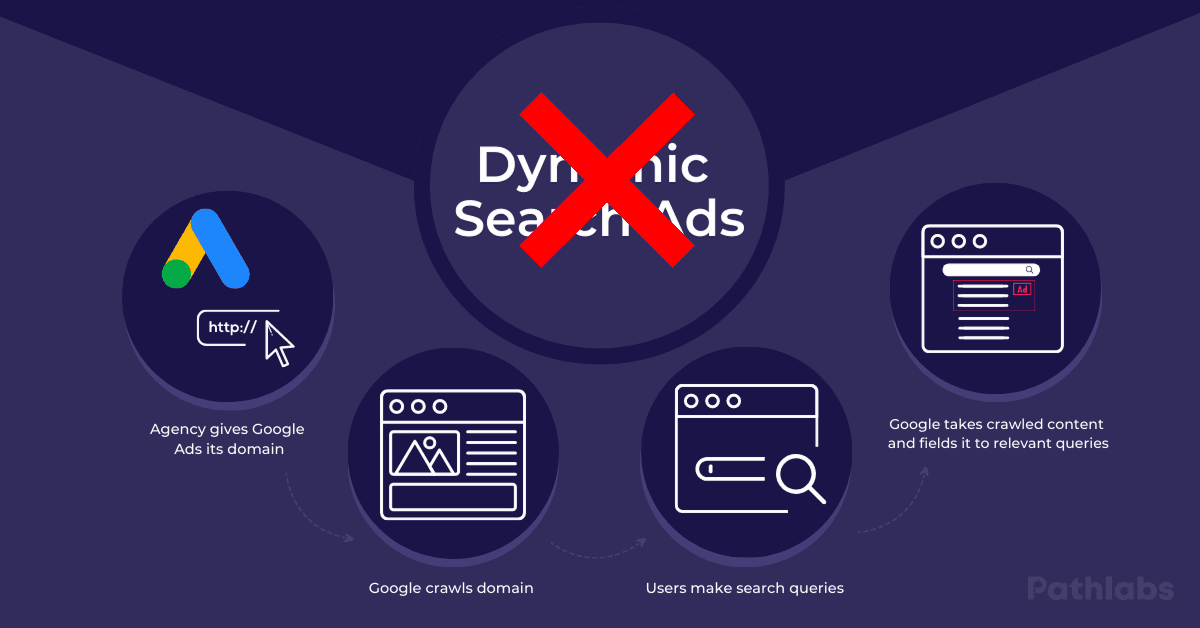
What's gone or going. DSA campaigns are upgrading to AI Max in September. Exact match keywords still exist but get interpreted more loosely than they used to. Search terms reports have thinned out. You can't bid the way you did five years ago.
What's still yours, and where your real test and learn now lives:
Negative keywords
Brand guidelines and tone rules you feed into AI Max
URL exclusions (career pages, policy pages, out of scope products)
Text customization guardrails
Location targeting
Your bidding strategy and conversion definition
The irrelevant queries will still slip through. Any account with meaningful volume sees them in the search terms report every month. The question isn't "what should I target next?" It's "what do I turn off before Friday?"
The new cadence: how often you need to check
Old rhythm. Set up the account. Let it run. Audit once a quarter.
That's dead. How often you check now depends on budget size.
Big budgets (think major Belgian ecommerce retailers): end of every week. New keywords to add, new ones to exclude, ad copy that has fatigued. At scale, a week of unchecked AI Max can spend into the wrong bucket fast.
Medium budgets: every two weeks.
Small budgets: minimum once a month. Any less and the account drifts.
New accounts: first few days, daily checks. Then stabilize into a rhythm.
If you walk into an account and the search terms report hasn't been touched in a year, that account is bleeding. We see it every time we audit a new prospect.
After the click: SEA is now a content role
Here's the insight most marketing teams still underrate. Your ad can be perfect and still not convert. Because Google's AI is reading the page the ad sends people to.
Google builds creative in real time based on your landing page, your product feed and your site content. Weak page for "sustainable blue jeans"? The ad copy it generates on top of that page will be weak too. Page that answers "how many grams per square meter is the denim, what's the shipping time, what's the return policy"? The generated ad gets sharper and the user who clicks is more likely to convert.
That changes the job description. A SEA specialist in 2026 is also:
A feed manager. Your Shopify or Channable product feed is where Google learns what you sell. Missing attributes, outdated prices, wrong categorizations all degrade AI Max performance.
A landing page reviewer. If a high intent keyword lands on a weak page, the fix is often in the page, not in the campaign.
A content curator. The questions your sales team answers every day should be on the site somewhere. Google's AI and the agentic shopping tools coming next will both read them.
A SEA specialist who only opens Google Ads is managing half the account. The other half lives on your website, in your feed, in your checkout.
What to do on Monday
Take one thing from this article. Take the checklist. Bring it to your next SEA review.
Cluster your ad groups by intent, not by keyword. Consolidate groups where the user is searching for the same thing in different words.
Pressure test AI Max by segment. Roll it out on B2C accounts with enough budget and a 4 to 6 week patience window. On B2B, delay or wrap it in heavy negative keyword lists and URL exclusions.
Flip your test and learn cadence. Your weekly review isn't "what new keyword should I add?" It's "what irrelevant query is Google matching me on this week, and what do I turn off?"
Audit your landing pages and feeds every quarter. The ad is 50% of the account. The page behind the ad is the other 50%.
Use the controls you still have. Negative keywords, URL exclusions, brand guidelines in AI Max, text customization rules. That's the work now.
The bottom line
Google isn't making SEA easier. It's making it different.
The skill isn't writing the perfect keyword list anymore. It's knowing which queries to kill, which pages to exclude, and how to read a feed file. Teams that adapt to exclusion first optimization see the efficiency. Teams still running 2022 thinking are the ones explaining to their CFO why spend is up and profit is flat.