How Google decides who to rank locally
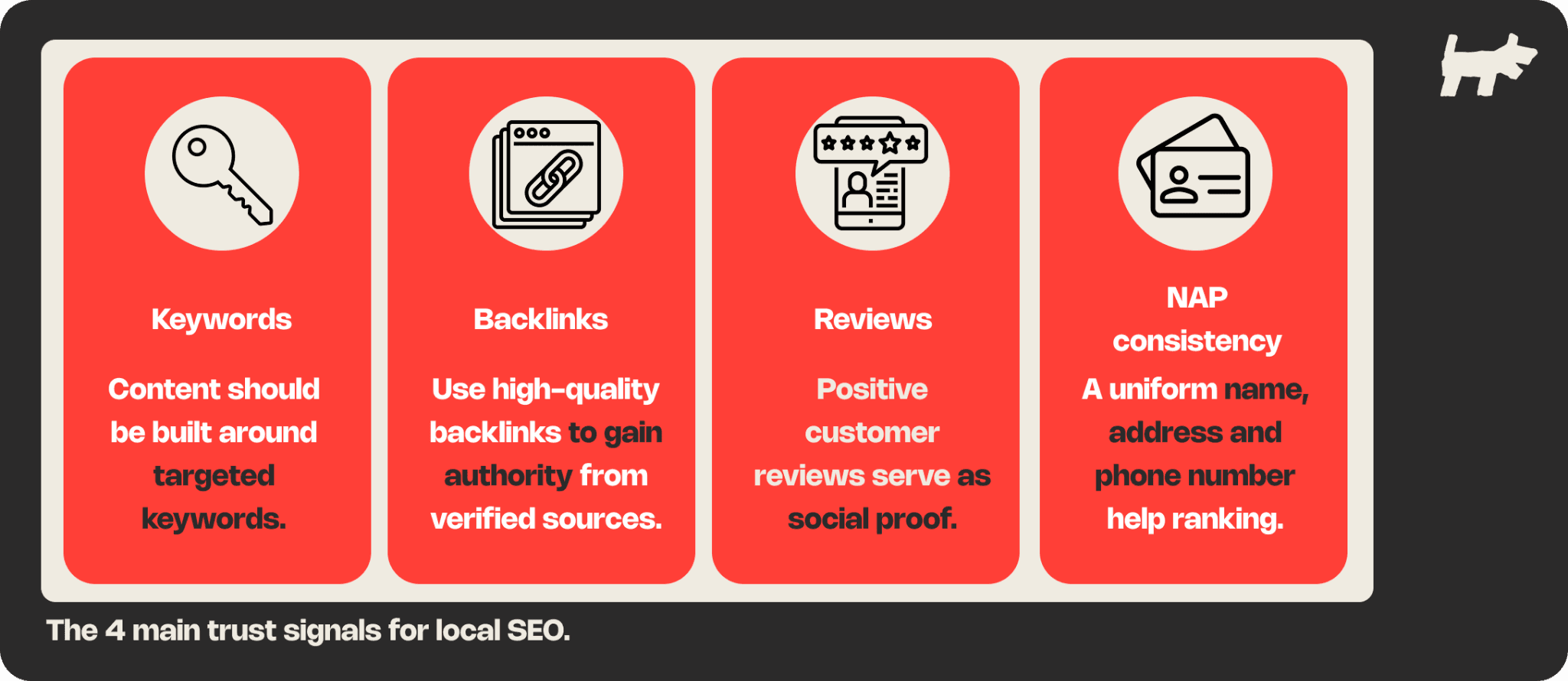
Google can't tell you who the best accountant in your city is. What it can tell is who the most credible one appears to be, based on signals it can measure. These trust signals determine ranking order:
How consistently your business name, address, and phone number appear across the web
How many authoritative websites link to yours
How many verified reviews you have from real customers
How complete and accurate your Google Business Profile is
The more trust signals you consistently generate, the more Google surfaces your business to people searching locally. In low-competition local markets, it doesn't take many signals to hit position 1. The businesses that get there and stay there are simply the ones that build those signals steadily and don't stop.
Step 1: Choose your primary keyword and put it everywhere on your homepage
Your primary keyword is the phrase your customers most commonly type when they need what you offer. For a Springfield accountant, that's probably "accountant in Springfield" or "Springfield accountant." Check your homepage right now. That phrase is likely nowhere to be found.
Fix it in 5 places:
The browser tab tagline (in WordPress: General Settings > Tagline)
The homepage H1 heading: change "Expert Small Business Accountants" to "Expert Accountant in Springfield"
The homepage URL path
At least one sub-heading (H2) on the homepage
The ALT text on any images
This is not keyword stuffing. It's telling Google clearly what your business does and where. Without this, you're asking Google to guess.
Step 2: Earn 10 guest post backlinks
The first trust signal Google weights heavily is backlinks. A link from a credible, relevant website tells Google your business can be trusted by association.
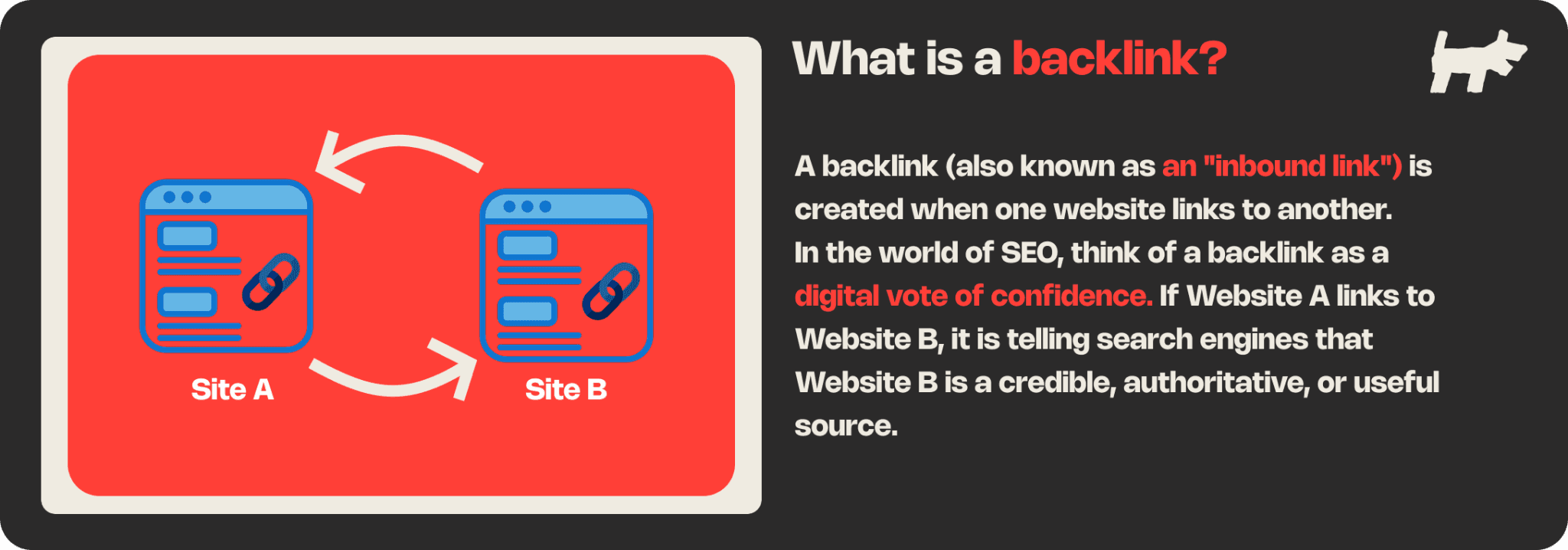
The most accessible way to build these early on is guest posting: writing a short article or thought piece for an industry-relevant website in exchange for a link back to yours. An accountancy firm might contribute a "year-end tax checklist" article to their accounting software provider's blog. A yoga studio might write for a local wellness publication.
10 high-quality, relevant backlinks will move a local ranking faster than 100 low-quality directory submissions. Start with 10, measure the ranking impact after 60 days, and iterate from there.
Step 3: Fix your NAP
NAP stands for Name, Address, Phone number. It sounds trivial. It isn't. Google uses NAP consistency to confirm that all the citations and mentions of your business across the web refer to the same entity. Inconsistency like "Happy Accountants" in one place, "Happy Accountants LLC" in another, confuses the signal and suppresses your ranking.
Decide on one canonical version of each:
Business name: "Happy Accountants" or "Happy Accountants LLC"
Address: full street address, same format everywhere
Phone: one number, same format everywhere
Put this in the footer of your website so it appears on every page automatically.
Step 4: Create and complete your Google Business Profile
A Google Business Profile is free and it is your most direct path to appearing in Google Maps and the local 3-pack (the 3 businesses Google highlights above organic results for local searches). If you don't have one, create it today. If you have one that's sparse or out of date, treat this as a priority fix.
When writing your business description, include your primary keyword naturally. Add photos, opening hours, a link to your website, and your service area. The completeness of your profile directly correlates with how often Google shows it.
Step 5: Create 10 citations on relevant directories
A citation is any online listing that includes your business name, address, and phone number, usually with a link to your site. After setting your NAP, create at least 10 citations, prioritising quality and relevance over volume.
The two most valuable types:
Local directories: your city's chamber of commerce, local newspaper business listings, regional business associations. These reinforce to Google that you're an active local business.
Industry-specific directories: accounting associations, plumbing trade bodies, wellness directories. These signal to Google that you're recognised within your professional category.
Avoid random mass-submission to hundreds of low-quality directories. 10 strong, relevant citations outperform 100 generic ones.
Step 6: Get 5-star reviews systematically
Reviews are the trust signal Google's local algorithm weights most visibly. More 5-star reviews from real customers means higher ranking, higher click-through rate, and higher conversion from the listing.
Three tactics that reliably increase review volume:
Ask at the moment of highest satisfaction: right after a project is delivered, a problem is solved, or a service is completed. Not in a bulk email a month later.
Make it frictionless. The path to leaving a Google review is longer than most people expect. Show them how on their phone while you're there: just being present during the process can increase your average star rating by at least one star.
Use a soft qualifier first: "Did you have a 5-star experience with us?" If the answer is yes, ask for the review. If it's no, that feedback is valuable. It’s better to hear it directly than to have it appear as a 2-star review online.
Compounding game
Local SEO is a compounding game. Each trust signal you add (a backlink, a review, etc.) makes the next one more valuable. Businesses that get to position 1 in local search and stay there are not doing anything sophisticated. They are doing these 6 steps consistently, over time, while their competitors aren't.