Why cold email fails: the offer is smaller than the ask
Most cold email campaigns fail the same test. The ask is bigger than the offer.
"Can we get 30 minutes on your calendar?" is a large ask. There is no offer. A busy operations manager at a 200-person company doesn't know you, doesn't trust you, and has no reason to give you half an hour.
The channel isn't broken. The value exchange is.
The rule we work from: your offer has to be worth more to the reader than the time they spend responding. When that's true, reply rates stop being a problem.
The Trojan Horse: disguise the sales conversation as research
The brief was straightforward. An IT security and infrastructure company wanted to start conversations with new prospects. They had a great offer. They had no pipeline. The challenge was getting people to care.
We looked at the context. This was during COVID-19 remote work transition. Cyber vulnerabilities were spiking. Every IT decision maker was thinking about the same thing: how do we keep distributed teams secure?
We built a campaign around "The State of Security and Remote Work": a research paper where we asked target organizations how they were handling the new security challenges. The pitch wasn't "buy our services." It was: join our research.
In exchange for a 15-minute survey call, respondents received:
Priority access to the finished research paper, with benchmarking data against other companies
A free security and remote work improvement consultation
A chance to win a team activity worth €500
The sales questions were embedded inside the research questions. That's the Trojan Horse. By the time the prospect accepted the call, our team had already started qualifying them. The conversation happened naturally, without the awkward pivot from "let's chat about your situation" to "here's what we offer."
The 4-email sequence
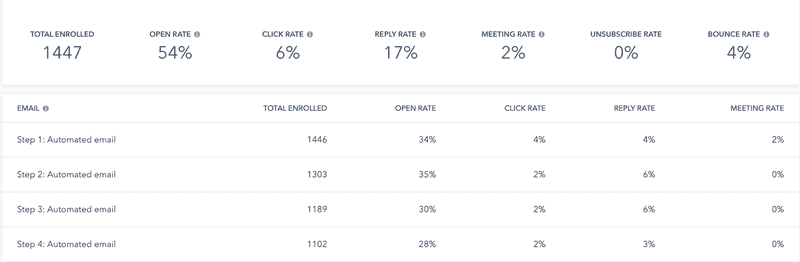
The campaign ran 4 emails per contact. Most marketers stop at 2, assuming persistence annoys people. The data from this campaign said the opposite.
The majority of replies came in on the third and fourth email. When we asked contacts in the calls why they hadn't replied earlier, the answer was consistent: they saw the first email, meant to respond, got pulled into something else, and forgot. The follow-up reminded them. Several said they were glad we didn't stop at one.
The 4-email structure:
Email 1: Introduction and offer. Short. Named the remote work and cybersecurity challenge. Listed the three things they'd receive in return for joining the research. No pitch.
Email 2: Condensed version of email 1. For contacts who didn't open the first. Shorter, same core offer.
Email 3: Reminder. Acknowledged they're busy, restated the value, made it easy to say yes.
Email 4: Goodbye email. The "last chance" frame. High urgency, low pressure. This one alone drove a significant portion of conversions.
A few copy rules we held throughout:
Short emails. Never more than 5 or 6 sentences.
Heavy whitespace. Every sentence earned its own line or near enough.
The subject line carried its weight. Nobody opens an email with a weak subject.
Personalization at minimum: first name, company name. Ideally one specific line about their industry or company.
Never sold anything before the call. The ask was always the research conversation, not a product demo.
The LinkedIn layer: how we warmed up a cold list
This is what separated this campaign from a standard cold email send.
We had the contact data. Before the first email landed, we ran LinkedIn marketing automation through Phantombuster to send each contact a personalized connection request and a short message.
The sequence looked like this:
LinkedIn connection request with a personalized message
Wait 2 days
Start the cold email sequence
By the time the first email arrived, a portion of the list had already accepted the connection, visited our client's LinkedIn profile, and seen the sender's face. The email wasn't cold anymore. It was a follow-up from someone they'd already connected with.
This multi-touchpoint approach is the underlying mechanic. The more times a prospect sees your name before you ask for something, the lower the friction when you finally ask. Email plus LinkedIn is not complicated to set up. Most campaigns skip it. That is the gap.
The results
The campaign generated:
54% email open rate
70+ booked video calls
5 prospects who asked immediately for a second call with a cybersecurity consultant
That last number matters. Those 5 weren't just politely participating in research. They had an active problem and recognised the company could solve it. That's what happens when the qualification happens inside the conversation instead of before it.
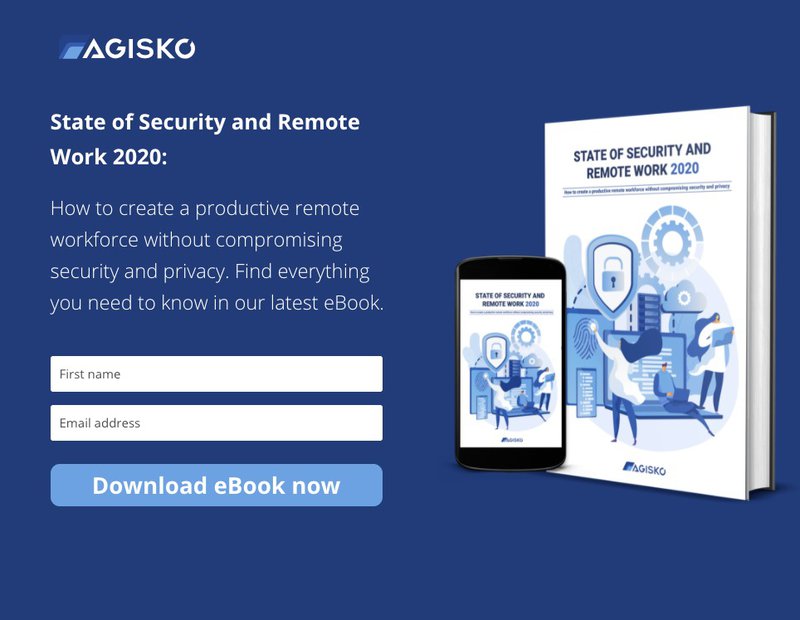
On top of the calls, the survey data became the backbone of an eBook they used as a lead magnet for follow-up campaigns. The same list that generated the 70+ calls got re-engaged with the finished research they helped create. The campaign didn't end with the calls. It built an asset.
And because the strategy is a blueprint, not a one-off, the client can replay it with a new target audience segment whenever they need to fill the pipeline.
Agisko, an ICT company scheduled 70+ calls and it’s not a one-hit-wonder. They now have a lead generation blueprint.
What to run tomorrow
You don't need a research paper. You need an offer the reader finds genuinely valuable.
Concretely:
Identify the question your target audience is already asking. In this case: "How are other companies handling remote security?" Find the version that exists in your market right now.
Build something lightweight that answers it. A benchmark report, a diagnostic checklist, a 10-question survey with peer data in return. It doesn't have to be long. It has to be useful.
Lead with the offer in email 1. Don't introduce your company. Introduce the value.
Write at least 4 emails. Respect the attention problem. People aren't ignoring you because they're not interested. They're ignoring you because they're busy.
Add one LinkedIn touchpoint before the sequence starts. A connection request with a short personal note. Do it 2 days before email 1 lands.
The Trojan Horse leads with value
Cold email has a reputation problem caused by lazy execution. The Trojan Horse approach doesn't fix that reputation. It sidesteps it entirely by leading with value the reader actually wants.
If your current outbound lead rate is flat and your SDR team is blaming the channel, the channel is rarely the problem. Start with the offer. Make it worth more than the ask. Write more emails than you're comfortable with. Add a LinkedIn touchpoint you're probably skipping.
The calls are on the other side..