Step 1: build your buyer persona before you pick a platform
Skipping this step is why most campaigns underperform. The platform does not determine your results. The match between your audience and your platform does.
A marketing decision-maker at a mid-size B2B company is not browsing TikTok during working hours. A growth marketer optimising acquisition is active on LinkedIn but also searches heavily on Google.
The questions that build a usable persona:
Age: What is the age group that your ideal customer would belong to?
Gender: Which gender is your product or service targeting?
Location: Where do your customers live?
Interests: What topics/ hobbies are your customers interested in?
Education: What is the highest level of education that your customers have?
Disposable income: How much do your customers earn and how much are they willing to spend on your products?
Social media preference: Which social media do your existing customers use?
Once you have this, you can map your ideal customer to the platform where they show buying intent, not just presence.
Platform selection: be where your audience has buying intent, not just an account
There are dozens of platforms. The ones worth your budget are the ones where your target buyer is actively trying to solve a problem, not just scrolling. A quick decision framework:
Facebook: local businesses, B2C products, community-driven niches. Strong for retargeting and lookalike audiences.
LinkedIn: B2B professional services, corporate buyers, and anyone selling to a team or department. 93% of B2B marketers rate it as their most effective channel for reaching professional buyers.
Instagram and TikTok: consumer products, lifestyle brands, younger demographics. Also useful for B2B organic thought leadership.
YouTube: hobby-adjacent products and services, high-consideration purchases, brand-building at scale.
Search (Google): any buyer actively researching a solution. The highest-intent traffic of any channel.
Businesses trying to take share from a larger incumbent often win fastest on search and LinkedIn, because those are the channels where buyers are actively evaluating options.
For a full breakdown of how to build the content strategy that supports this, see our guide on growth marketing.
Facebook: community targeting and messenger campaigns
Facebook works best for businesses with a local or community dimension: tradespeople, local service providers, B2C brands, and any business where the buyer and the product share a geographic or interest context. Facebook ads start from roughly $1 per day, which makes it accessible for businesses that are still testing their audience before committing budget.
Two tactics that consistently outperform standard feed ads:
Community group targeting
Find active Facebook groups where your target buyer already gathers. A bike repair shop targets local cycling enthusiast groups. A B2B software company targets industry peer groups. Join, contribute, and build credibility before running ads. Ads shown to a warm community audience convert at 2 to 3 times the rate of cold traffic.
Messenger campaigns with a story-first approach
We ran a Messenger campaign for Crimibox, a Belgian brand selling unsolved murder cases as detective games. Instead of sending a direct product ad, we created a "Discover your inner detective" quiz. The Messenger sequence started with character immersion and a cliffhanger CTA.


The results were promising: 10,464 subscribers, 109,715 messages sent, €0.16 cost per message on the UK campaign. The US campaign reached 48,899 people at €0.33 per message.
The 4 principles that made it work:
Personalization: the message addressed the reader directly and matched the tone of the detective narrative.
Story over pitch: no product push in the first touchpoint. The story created desire before the offer appeared.
Retargeting: everyone who engaged with the quiz was retargeted with the product offer.
Emotion and visuals: character imagery and emoji-led formatting drove click-through above benchmark.

This approach works especially well for businesses that need a warm audience before asking for a conversion. A quiz or interactive format builds that warmth without the friction of a direct ad.
For the paid social targeting layer that supports this, see our guide on Facebook marketing for real estate agents (the audience logic applies across industries).
LinkedIn: the 9-step system that generated 18,500 views and 412 comments
93% of B2B marketers rate LinkedIn as the most effective platform for reaching professional buyers. For any business selling to a company, a team, or a decision-maker, it is the primary channel. The problem is that most teams post a lead magnet, get 3 to 5 likes, and conclude that "LinkedIn does not work for us." The platform works. The system most teams use does not.
We published an eBook on lead generation on LinkedIn using the approach below. It reached 18,523 views and 412 comments. Here is the 9-step system:
Optimize your LinkedIn Profile
Find your target audience via LinkedIn Sales Navigator.
Send automated personalized messages and connection requests to your target audience. Get ready to generate leads.
Create a valuable lead magnet for your target audience.
Find or create a LinkedIn Pod.
Post your lead magnet with a twist and respect the LinkedIn algorithm.
Scrape your hot hot hot quality leads
Send them your eBook and add them to your nurture flow

For businesses building credibility against a larger competitor, LinkedIn thought leadership is one of the fastest ways to do it without a larger budget. For how Thought Leader Ads can amplify organic posts that are already performing, see our dedicated guide.
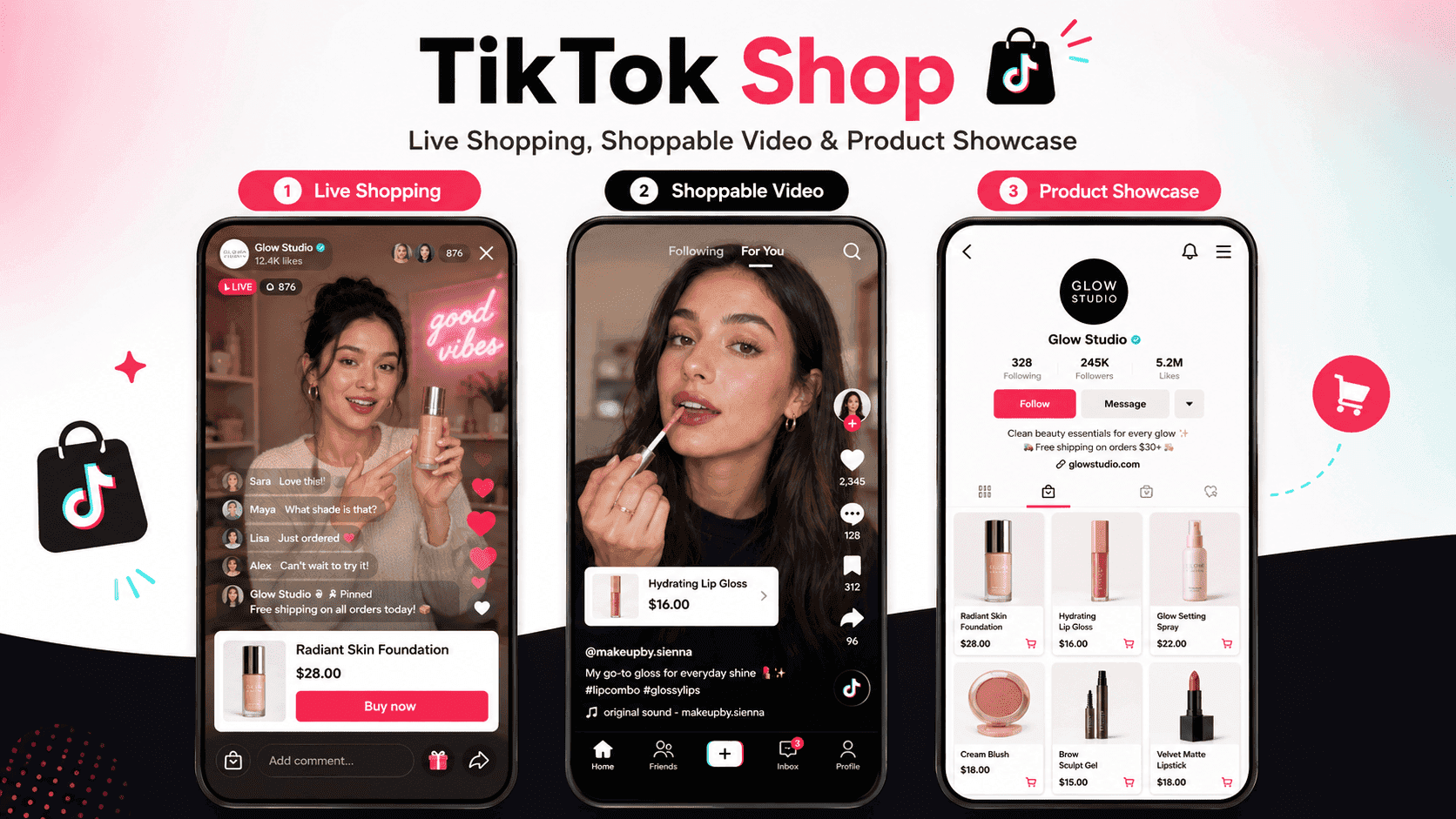
Instagram and TikTok: influencer strategy and retargeting
Instagram and TikTok work best for consumer products, lifestyle brands, and businesses where the product is visual or experiential.
The key distinction from search is intent: people on Instagram are browsing, not searching. Your job is to interrupt that browsing with something relevant enough to earn a second look.
The tactic that consistently outperforms standard feed ads is contextual influencer targeting. Find an influencer whose audience is already your target buyer, and reach that audience through their trusted voice rather than a brand ad.
An example: a Belgian smartwatch brand running Instagram ads targeted people who follow tech-focused accounts and had recently searched for Apple Watch alternatives. The ad led with the EDA sensor as the main USP. That specificity is what makes the ad relevant rather than generic.

It doesn’t stop here. One does not simply buy something because they see it once. Retargeting is the key here. This is a possible action plan you can take:
Do livestreams
Try celebrity endorsements
Promote an ad on their timeline
Make use of hashtags to get viral
Target your ad towards a specific audience
Host free giveaways to create engagement
Find affiliates to review your products/ services
Ask instagram celebrities/ influencers to post a picture using your product
Post a sponsored story with a short ‘day-in-life’ of using the product/ service
Capitalise on user generated content. Ask your customers to take pictures of your products and share them with you to be featured on your instagram page.


For businesses building a hyper-personalization layer into acquisition campaigns, the combination of influencer targeting and retargeting is the closest thing to 1-to-1 marketing at scale on social.

YouTube: pre-roll ads and creator partnerships
YouTube works for businesses where the buyer is actively researching a category. A cookware brand advertising before cooking videos. A B2B software tool advertising before productivity or workflow content. The audience targeting is contextual: you reach people while they are already in the mindset you want.
For pre-roll ads, you have 5 to 6 seconds before the viewer can skip. That window needs to do one of three things:
Open with a cliffhanger that makes skipping feel like missing out.
Show something visually unexpected that stops the reflexive skip.
Start a story mid-sentence, so the viewer is already inside it before the skip option appears.
Gordon Ramsay's MasterClass ads are the canonical example. The first frame is a close-up of food being plated with the sound of a professional kitchen at full heat. The logo appears in the first 3 seconds so that even viewers who skip have registered the brand. The ad then uses a "watch carefully" cliffhanger and intermittent text breaks to sustain attention through a 90-second trailer.
Search: SEO for long-term traffic, SEM for competitive categories
72% of search engine users click only on the top 5 results. For any buyer actively researching a solution, search is the highest-intent channel in your mix. The question is whether you build that visibility through SEO, pay for it through SEM, or both.
SEO and SEM solve different problems:
SEO (Search Engine Optimisation): builds organic visibility over time. The right choice for businesses that can invest 3 to 6 months in content before seeing returns. Every article, guide, or tool page you publish is a permanent asset.
SEM (Search Engine Marketing / PPC): pays for immediate top placement. The right choice for competitive categories where organic ranking takes too long, or for specific high-intent keywords where the conversion value justifies the cost per click.
The 8 SEO steps worth doing first:
Build a complete site map and assign one target keyword to each page.
Do keyword research using a tool like Ahrefs or Semrush before writing anything. Write for search demand, not internal vocabulary.
Add descriptive alt tags to all images. Search engines cannot see images, only their descriptions.
Write blog posts on topics your target buyer is actively searching, not topics you find interesting.
Build internal links between related content pages.
Earn backlinks from reputable sites in your industry to signal authority to search algorithms.
Write SEO titles and meta descriptions that include the target keyword and give a clear reason to click.
For B2B companies: prioritise SEO on the problem-aware queries your buyers type when they first recognise they have a challenge. See our guide on keyword research with Ahrefs for the specific process.

SEM works best in categories where top-of-results placement directly converts to leads or sales, and where the cost per click is lower than the revenue per customer. For businesses trying to take share from a competitor with stronger domain authority, SEM via PPC ad networks is often the fastest path to first-page visibility while the SEO programme builds.
Pick one platform and prove the model
The platform is not the strategy. The strategy is knowing which buyer you are targeting, where they have buying intent, and what format earns their attention in that context. Pick one platform to start, build the targeting and creative approach correctly, and prove the model before expanding.