Hack 1: one word in your meta title can move the needle
Developer community Coderwall ran an experiment on their meta title tags. They added the single word "(Example)" to a set of pro-tips pages. Traffic increased by nearly 60%. One word.
The reason this works is simple: meta titles and descriptions are your organic ad copy. They are what users see before they decide whether to click. Most businesses treat them as administrative fields, not conversion opportunities. A meta title that matches the specific phrase a user is searching for, or that signals the exact type of content they want, will get a higher click-through rate than a generic one. Higher click-through rate is a positive ranking signal for Google.
How to apply this:
Open Google Analytics and identify your top 5 to 10 performing pages by organic traffic.
Cross-reference those pages in Google Search Console to see which queries are already triggering impressions but getting low click-through rates.
Look at the top-ranking pages for those queries and compare their meta titles to yours. Is there a word, phrase, or format they use that yours is missing?
Update the meta title and description on each page to include the missing term or better match the query intent.
Monitor click-through rate and ranking position over the following 4 weeks.
This pairs well with a structured keyword research process. See our guide on how to do SEO keyword research with Ahrefs for a repeatable method.
Hack 2: site speed is a ranking factor and most sites are still slow
Google made site speed a ranking factor in 2010. It extended that to mobile in 2018. Despite this being well-documented, slow load times remain one of the most common technical SEO problems we find when auditing client sites.
The practical fix list:
Upgrade your hosting if it is cheap. Shared hosting on a low-cost provider is often the single biggest drag on load time, especially under traffic spikes. The cost of better hosting is almost always less than the cost of the ranking you are losing.
Compress and optimize images. Use JPEG for photographs, PNG for graphics with transparent backgrounds. Serve images at the size they are actually displayed, not at the original upload resolution. Tools like Squoosh or ShortPixel handle this automatically.
Minify your code. Remove whitespace, unused CSS, and redundant scripts. Most CMS platforms have plugins that do this without manual intervention.
Reduce redirects. Each redirect adds a round-trip request. A chain of three redirects before the page loads can add hundreds of milliseconds. Audit redirect chains and eliminate them.
Delete excess data and dead links. Old plugins, unused scripts, and broken internal links all add overhead. A clean site loads faster and signals higher quality to crawlers.
Check your current performance at Google PageSpeed Insights (pagespeed.web.dev). Enter your URL and the tool gives you a score plus a prioritised list of what to fix first. Start with the highest-impact items, not the easiest ones.
Hack 3: backlinks and deadlink hacking
Backlinks remain one of the strongest ranking signals Google uses. A link from a credible external site is a vote of confidence in your content. More high-quality backlinks means higher authority, which means higher rankings for competitive queries.
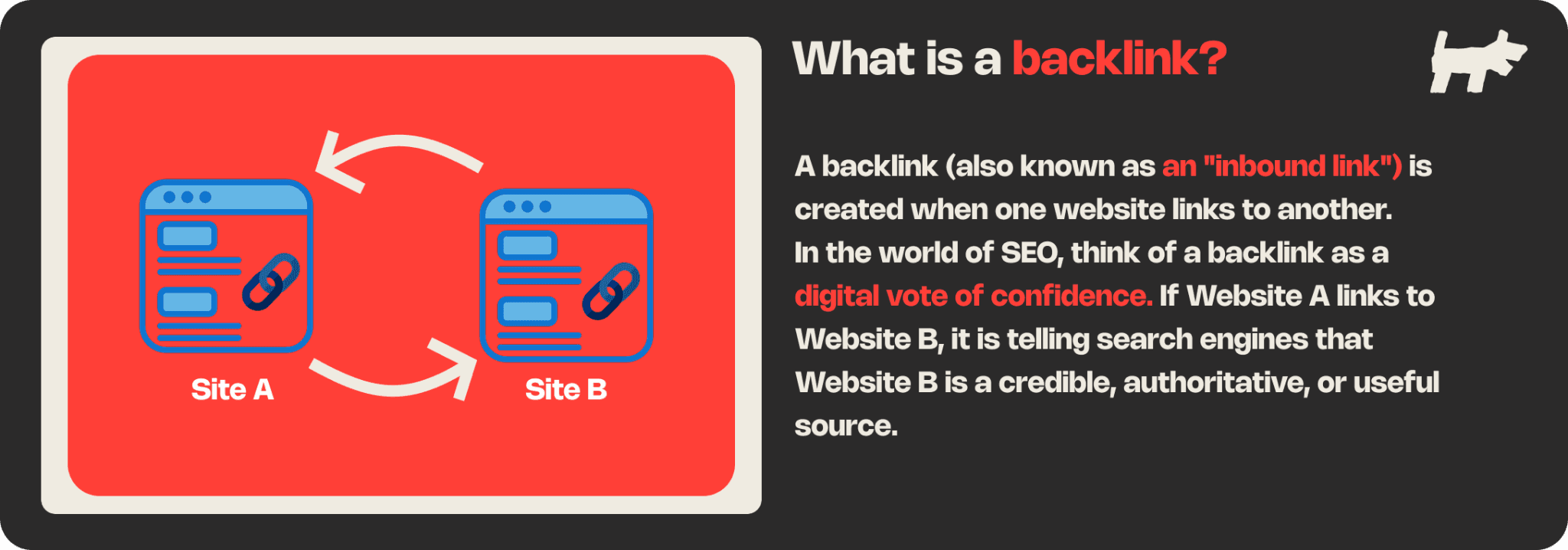
Most businesses know backlinks matter. Fewer know how to build them without cold outreach that gets ignored. Two approaches that work:
Earn links through presence and participation
If no one knows your site exists, no one will link to it. The fundamentals: register your business in relevant directories, contribute to industry forums and community discussions, publish guest posts on credible sites in your niche, and engage in social media conversations where your content is relevant. Links follow credibility, and credibility follows presence.
Deadlink hacking: turn competitors' dead links into yours
This is one of the most underused tactics in SEO. When a competitor closes down or changes their URL structure, the sites that were linking to them still carry those broken links. Those links currently go nowhere. They are available to be redirected to your content instead.
How it works:
Identify former competitors or businesses in your space that have closed, rebranded, or significantly changed their site structure.
Use a tool like Ahrefs or Semrush to find sites that are still linking to their old (now broken) URLs.
Reach out to the site owners and let them know their link is broken. Offer your content as a relevant replacement.
This is a win for both parties: the site owner fixes a broken link, and you gain a contextually relevant backlink. Conversion rates on this outreach are significantly higher than cold link-building requests because you are solving an actual problem for the recipient.
For a wider view of what drives organic ranking, see our guide to SEO growth hacks and outranking competition for additional tactics.
Hack 4: write for voice search and natural language queries
In 2018, Google reported that 27% of mobile users were using voice search. That figure has grown significantly since. Voice search queries are structurally different from typed queries. Typed: "best CRM Belgium B2B". Voice: "What is the best CRM for a small B2B company in Belgium?"
Writing content that answers natural language questions directly means you rank for both. The tactics:
Use Answer the Public or Quora to find the actual questions people ask about your topic. These are your content briefs.
Structure content with explicit question-and-answer formatting. Write the question as a subheading and answer it in the first sentence below. This signals to Google that your page directly answers that query.
Target featured snippet format. Google pulls voice answers from featured snippets. A concise, factual answer in 40 to 60 words, placed directly below a question-formatted H2, is the target structure.
Four data points on voice search behaviour worth knowing:
51% of people who shop by voice use it to research products before buying
28% of people who voice search a local business go on to call them
52% of voice search users want brands to send them information about deals and promotions
Nearly 5.5 million US adults make purchases via smart speakers regularly
The content format that wins voice search is the same format that wins featured snippets. Structuring your content this way benefits both.
Hack 5: UX is a ranking signal and most sites underinvest in it
Google does not only measure what is on your page. It measures what users do when they get there. Time on site, bounce rate, and pages visited per session are all signals that feed the ranking algorithm. A page that people leave in 4 seconds is being quietly demoted. A page that people stay on and navigate from is being quietly promoted.
The principle: a page with genuinely useful, clearly structured content that loads quickly and is easy to navigate will outrank a page that is technically optimised but provides a frustrating experience.
What to audit:
Navigation clarity. Can a first-time visitor find what they are looking for in under 10 seconds? If not, simplify the menu structure.
Content scannability. Use subheadings, bullet points, and short paragraphs. Dense blocks of text increase bounce rate.
Mobile usability. Test your site on a phone. Buttons that are too small, text that requires zooming, and pop-ups that cover the screen all increase bounce rate on mobile, which is now the majority of traffic for most sites.
Internal linking. Link to related content within your site. Each additional page visited is a positive engagement signal and increases the chance of conversion.
Our work with Haacht Brewery in Belgium is a concrete example. We redesigned their product pages to create a clean, well-structured layout that made it easy for visitors to find and understand the product range. Traffic and sales increased as a direct result. The change was structural, not technical.
If you want to understand how UX improvements fit into a broader growth process, see our article on optimising your growth marketing process in 5 steps.
The compounding effect of doing all five
Each of these techniques works independently. Combined, they compound. A faster site with better meta titles earns more clicks. More clicks signals higher relevance to Google. Higher relevance improves ranking for a broader set of queries. Better ranking brings more backlink opportunities. More backlinks build domain authority that lifts all your pages.
None of these require a large technical team or a significant budget. They require attention, a willingness to look at what the data is telling you, and the discipline to act on it systematically rather than chasing the next tool or algorithm update.
For the full picture on how SEO fits into a paid and organic acquisition strategy, see our breakdown of PPC and ad network strategies in Belgium.