PPC and ad network strategies in Belgium: how to pick the right platform and maximise your ROI
What PPC and ad networks are
PPC (pay-per-click) advertising means you pay each time someone clicks your ad. You set a budget, define your audience, write your creative, and bid for placement. The spend is directly tied to action, not just visibility.
Ad networks are the platforms connecting advertisers to audiences across channels: search results, social feeds, display banners, video pre-rolls, and more. Google Ads, LinkedIn Ads, Meta Ads (Facebook and Instagram), and TikTok Ads are all ad networks. Each serves a different audience in a different context with a different intent.
The practical implication: the right ad network for a B2B SaaS company selling to procurement managers looks nothing like the right network for a D2C (Direct-to-Consumer) fashion brand selling to 25-year-olds. Budget goes further when the platform matches the audience.
What Belgian marketers actually prefer: State of Growth 2023 data
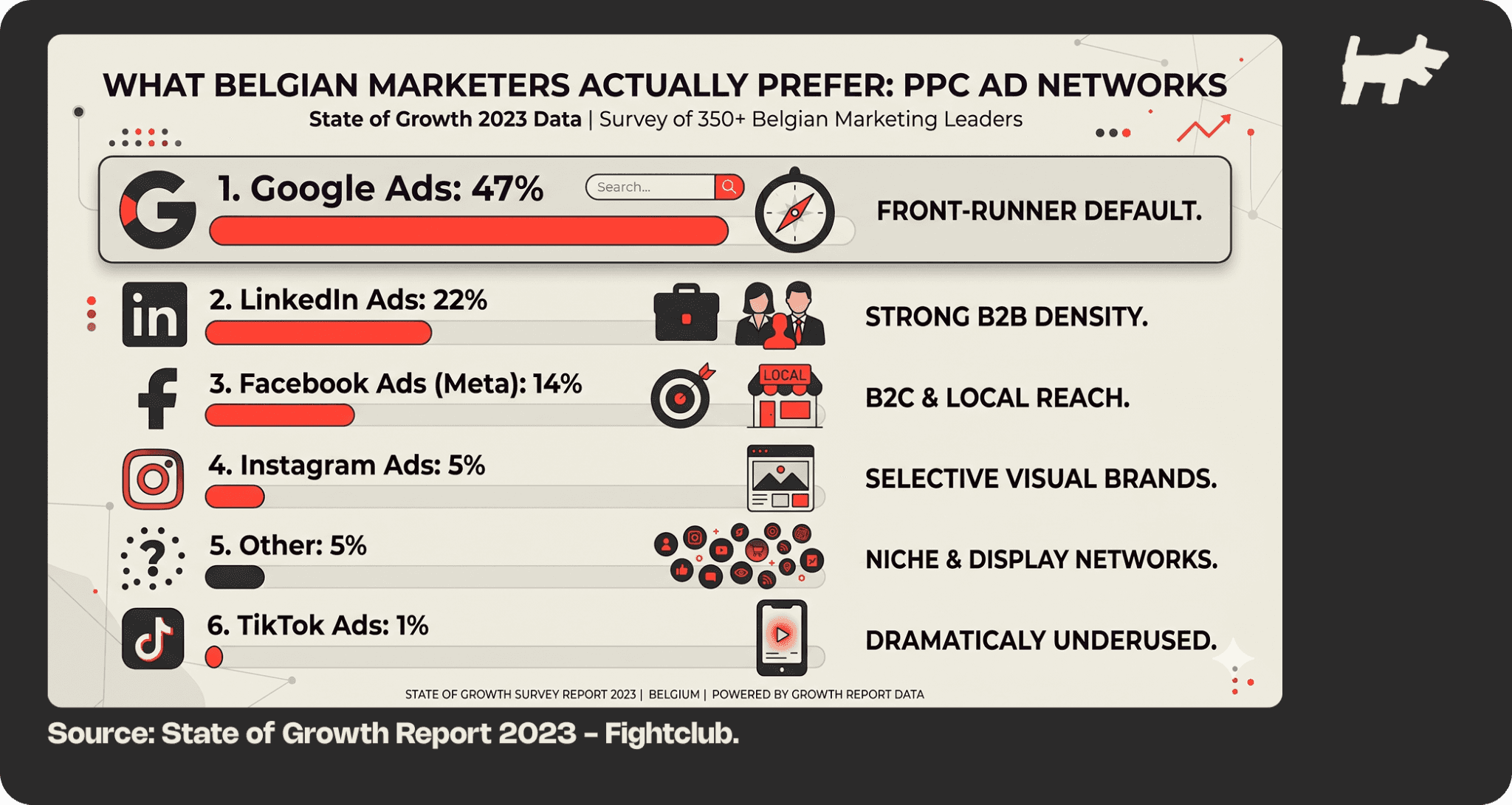
We surveyed more than 350 marketing leaders in Belgium about their preferred PPC ad networks. The results:
Google Ads: 47%. The clear frontrunner. Broad reach, strong intent targeting via search, and a mature ecosystem of tools make it the default for most.
LinkedIn Ads: 22%. Second place, and higher than most European benchmarks. Belgium has a dense B2B professional community and LinkedIn reflects that.
Facebook Ads (Meta): 14%. Strong for B2C and local businesses. Wide demographic reach and low entry cost make it accessible at almost any budget level.
Instagram Ads: 5%. Typically bundled with Facebook through Meta Ads Manager, but used more selectively for visual brands and younger audiences.
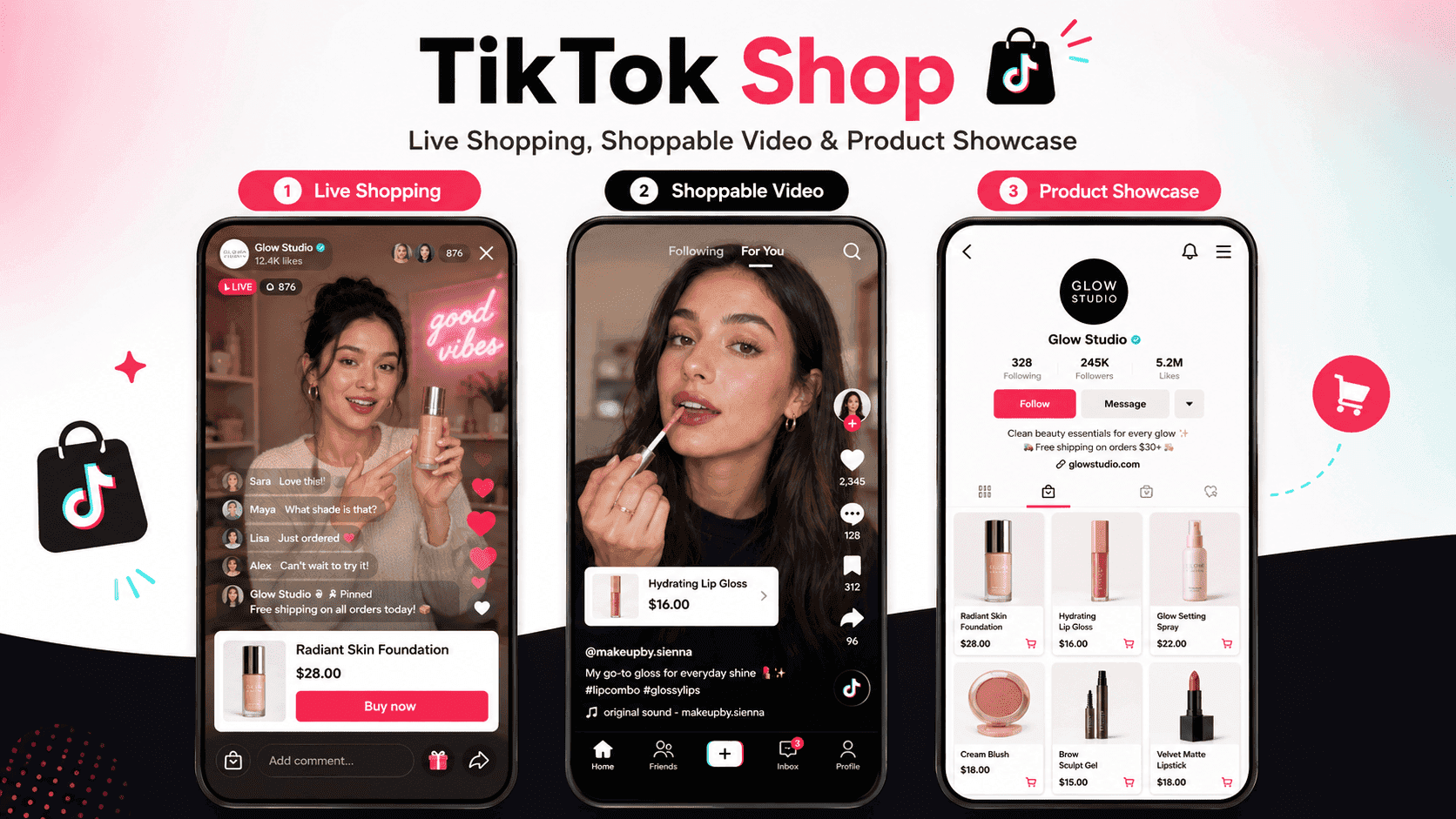
TikTok Ads: 1%. Dramatically underused relative to the platform's actual reach. More on this below.
Other: 5%. Display networks, programmatic, and niche platforms.
Platform breakdown: what each network is actually good for
Google Ads: high intent, high competition
Google Ads captures demand that already exists. Someone searching "B2B accounting software Belgium" has a problem and is actively looking for a solution. Your ad appears at the point of highest purchase intent.
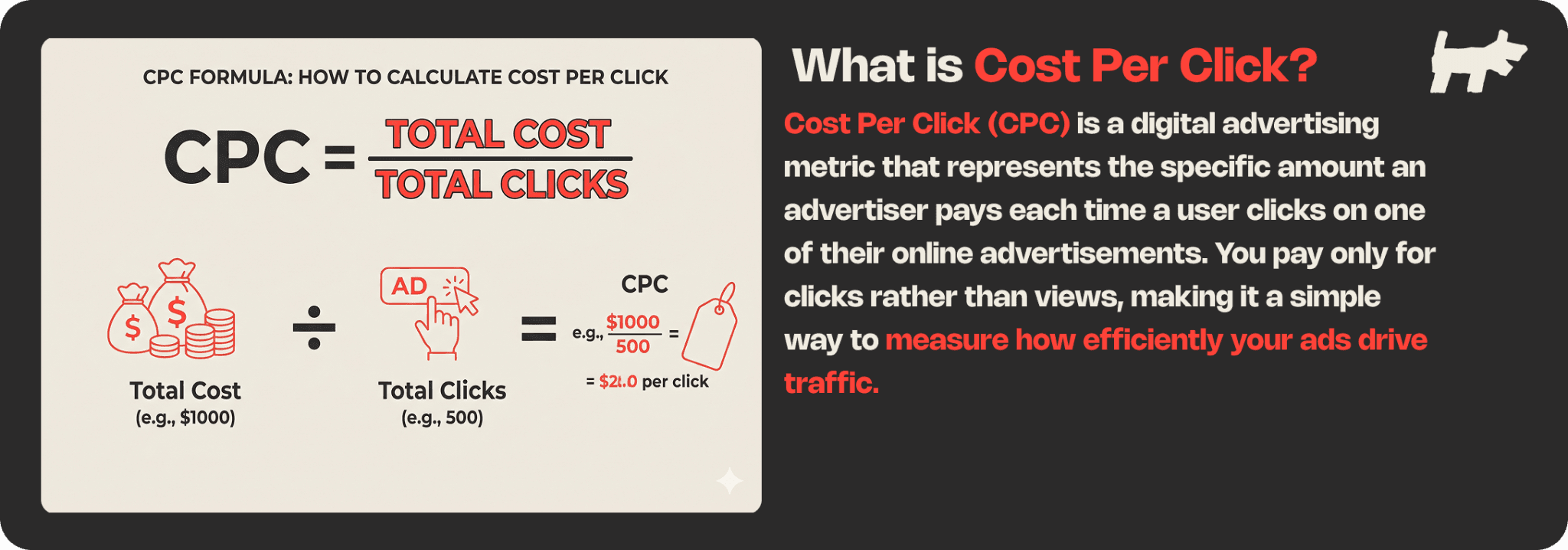
The trade-off is cost. Google Ads is the most competed-for platform in Belgium, which means CPCs (cost per click) are higher across most categories. It rewards advertisers who invest in keyword research, quality score optimisation, and well-structured ad groups. Campaigns that treat it as a set-and-forget channel tend to see ROI erode over time.
For local businesses, Google Ads pairs well with an organic SEO strategy. See our breakdown of how to dominate local SEO in 6 steps for the complementary approach.
LinkedIn Ads: the B2B precision tool
LinkedIn's targeting is unlike any other platform. You can filter by job title, seniority level, company size, industry, skills, and years of experience. For B2B campaigns targeting decision-makers, no other platform lets you reach a CMO at a 500-person Belgian manufacturing company with that level of precision.
The cost is higher per click than most other platforms. But when the right person sees the right message at the right career moment, the conversion value justifies it. LinkedIn is also the platform most tolerant of longer, more considered ad formats: thought leadership content, whitepaper downloads, and event registrations all perform well here.
For a deeper look at organic LinkedIn strategy that supports your paid efforts, see: how to create LinkedIn ads: 5 tips for higher conversions.
Facebook and Meta Ads: reach and retargeting at scale
Facebook's user base in Belgium skews toward 30 to 55 year olds, with strong purchasing power and broad interest categories. For B2C brands, local service businesses, and event-based campaigns, Facebook Ads deliver reach that Google and LinkedIn cannot match at the same price point.
Meta Ads Manager also gives you access to Instagram placements, Reels, and Messenger. The real strength is retargeting: showing relevant ads to people who have already visited your site, engaged with your content, or match a lookalike profile of your existing customers. Dynamic retargeting (serving ads featuring the exact products a visitor viewed) consistently outperforms static campaigns.
For practical campaign structures and creative strategies on Facebook, see our Facebook marketing guide for real estate agents (the mechanics apply well beyond real estate).
TikTok Ads: the underused opportunity
Only 1% of Belgian marketing leaders named TikTok as their preferred PPC network. The platform has over 1 billion monthly active users. That gap is an opportunity for businesses willing to test it.
TikTok is not only for Gen Z. Its algorithm surfaces content based on behaviour, not just demographics, which means well-crafted content regularly reaches 35 to 55 year olds even on accounts without a large following. The State of Growth 2023 data shows TikTok has been used successfully in B2B advertising experiments, not just B2C.
The platform rewards native-feeling content: short, direct, visually driven, with a clear hook in the first 2 seconds. Ads that look like ads get scrolled past. Ads that look like content get watched.
How to choose the right ad network for your business
Four questions to answer before committing budget:
Where is your audience? Match platform to the demographic and professional profile of your buyer persona. A 22-year-old B2C consumer and a 45-year-old procurement director require completely different platforms.
What is the intent at the moment of seeing the ad? Search ads (Google) capture existing intent. Social ads (LinkedIn, Meta, TikTok) create and interrupt. The right approach depends on whether you are harvesting demand or building it.
What is your budget ceiling per conversion? Higher-value B2B products can absorb a higher CPC because the lifetime value justifies it. Lower-margin B2C products need volume efficiency. Each platform has a different cost structure.
What creative can you actually produce? TikTok requires short video. LinkedIn rewards professional thought leadership. Google Search is pure copy. Your team's creative capabilities should factor into the choice.
Combine this with a clear growth marketing strategy and run platform tests as experiments before committing significant ongoing budget.
Maximising ROI once you have chosen a platform
Platform selection gets you to the starting line. These five practices determine the result:
Define the objective before building the campaign. Awareness, lead generation, and direct conversion require different structures, bidding strategies, and creative formats. Mixing them in one campaign creates conflicting signals.
Target the right keywords with intent in mind. For Google, long-tail keywords with clear purchase intent outperform broad terms on conversion rate, even when they have lower search volume. Tools like Ahrefs help identify which keywords your competitors rank for but you do not yet. See our guide on how to do SEO keyword research with Ahrefs.
Write ad copy that does one job. State the value proposition clearly. Match the message to what the user was searching for or doing when the ad appeared. Include one call to action, not three.
Build landing pages that match the ad. A landing page that does not directly continue the promise made in the ad loses the click. The message, offer, and visual tone should feel continuous from ad to page.
Monitor campaign performance regularly and act on it. Track click-through rates, conversion rates, and cost per conversion. Pause underperforming ad groups. Increase budget behind what works. Attribution models help you understand which touchpoints are actually driving conversions, not just the last click.
Three trends in PPC worth acting on now
Sponsored social posts as brand-building tools
Social PPC is increasingly being used for top-of-funnel brand awareness, not just direct conversion. Boosting organic content that already performs well is one of the lowest-effort ways to extend reach to new audiences. Test this before committing to fully produced ad creative.
Mobile-first campaign design
More than 60% of web traffic now comes from mobile devices. Campaigns designed primarily for desktop and adapted for mobile consistently underperform campaigns designed mobile-first. Check your ad previews on mobile before launching. Ensure landing pages load in under 3 seconds on a 4G connection.
Video as the default creative format
Video ad spend is growing faster than any other format across all major platforms. YouTube, TikTok, Instagram Reels, and LinkedIn video all reward short, attention-grabbing content with stronger distribution. You do not need production budget to start: clear, well-lit smartphone footage with a strong hook outperforms overproduced creative on most social platforms.
Pick the platform your audience uses, not the one your competitors use
The State of Growth 2023 data shows that most Belgian businesses are concentrated on Google and LinkedIn. That concentration reflects familiarity, not optimal allocation. If your target audience is on TikTok or Facebook and your competitors are not, you have a cost and attention advantage worth testing.
Pick your platform based on where your buyer actually is, what they are doing when they see your ad, and what you can afford to pay per conversion. Build campaigns around clear objectives. Monitor, iterate, and move budget toward what works.