What is growth marketing?
Growth marketing is a long term approach to marketing built around experimentation and personalization. It is designed to attract, engage, and retain customers by understanding not just who they are, but what they want and when they want it.
Where traditional marketing tends to broadcast to broad audiences, growth marketing works at the level of specific customer profiles. It uses data to deliver personalized messaging across multiple channels: social media, email, chatbots, content, paid media. The right message, to the right person, at the right moment in their journey.
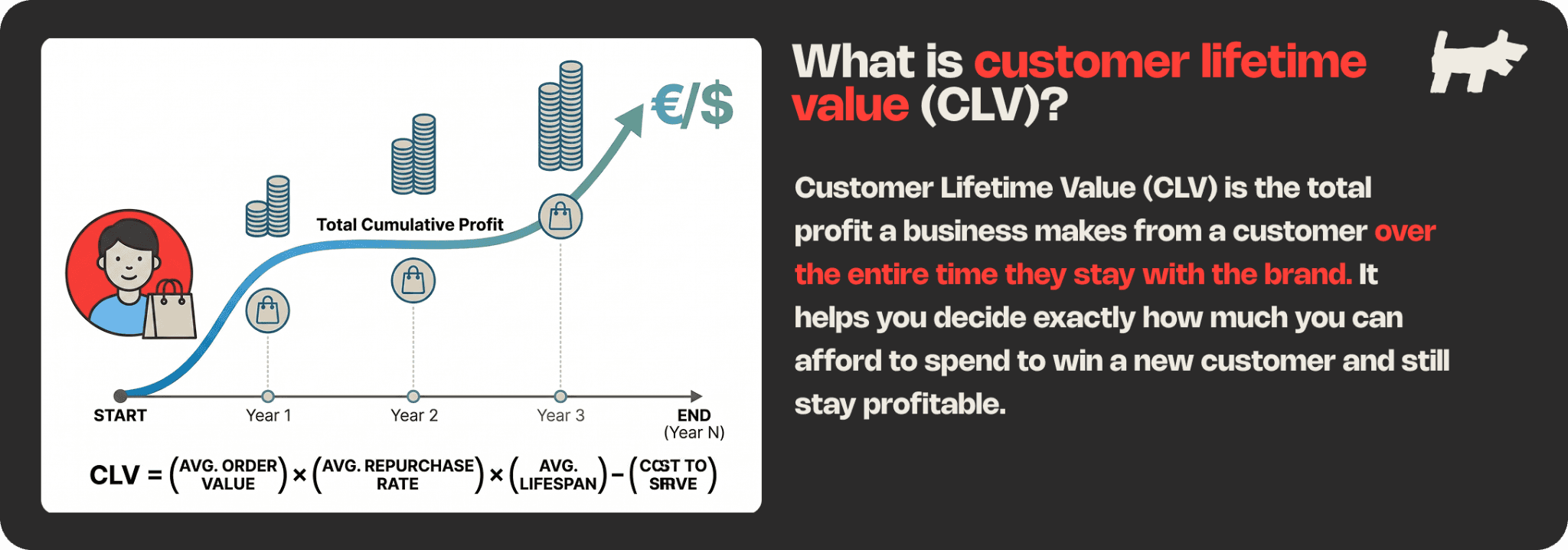
The output is not just growth in acquisition numbers. It is growth in customer lifetime value (CLV), reduced acquisition costs, and the kind of loyalty that turns customers into advocates.
How growth marketing differs from traditional marketing
Both approaches are long term. That is where the similarity ends.
Traditional marketing relies on techniques that have a place in any campaign mix but do not adapt or personalize at the depth needed to accelerate growth. Seasonal promotions, mass email blasts, broad keyword targeting on Google and Meta. These produce short term results because the business knows its industry. They plateau quickly because there is no mechanism for learning or iteration.
Growth marketing builds a system that gets smarter over time. Every campaign produces data. That data informs the next campaign. The strategy compounds rather than repeats. If you want a sharper breakdown of where growth marketing and growth hacking diverge (they are related but not the same), that article covers it directly.
What a growth marketer does
Growth marketers are sometimes called T-shaped marketers. The horizontal bar of the T represents broad knowledge across marketing disciplines: SEO, paid media, social, content, data analytics. The vertical bar represents deep expertise in at least one of those areas.
In practice, a growth marketer's job is to experiment. They test variables across channels and campaigns to find what drives growth for a specific audience at a specific moment. They are not running the same playbook every quarter. They are running controlled tests, reading the results, and adjusting.
The experiments are not random. They are structured around the customer lifecycle, the metrics that matter for that lifecycle stage, and hypotheses grounded in behavioral data. The result is a marketing operation that gets more precise and more efficient over time rather than more expensive.
Growth marketers blend traditional marketing techniques with modern digital tactics, growth hacking examples, and data-driven experimentation. They sit at the intersection of marketing, product, and analytics.
What a growth marketing strategy looks like
A growth marketing strategy is not built around rapid acquisition spikes. It is built around continuous, sustainable brand growth. That does not mean growth hacks are off the table. Growth marketers use them actively, but as experiments within a broader system rather than as the strategy itself.
The strategic foundation is data. Growth marketers use it to answer four questions before designing any campaign:
Who is viewing the content?
When are they viewing it?
Which segments can be identified and separated?
Which channels are those segments actually using?
The answers to those questions shape a growth marketing canvas: a map of who your customers are, where they are, and what they respond to. From there, the strategy is to create highly personalized content that meets each persona at the right point in their journey, then monitor behavioral signals to stay ahead of what they want next.
The longer the strategy runs and the more data it accumulates, the lower the cost of acquisition becomes and the higher the customer lifetime value grows. That is the compounding effect that separates growth marketing from one-off campaigns.
Key aspects of a digital growth marketing strategy
Digital growth marketing tracks many of the same metrics as traditional marketing:
Customer lifetime value
Customer acquisition cost
Lead generation cost
Conversion rates
Cost per acquisition
Persona metrics
Social media metrics
What changes is what growth marketers do with those metrics. Three practices define the approach.
Recognise and optimize your customer lifecycle
The customer lifecycle has five stages: reach, acquisition, conversion, retention, loyalty. Growth marketers design specific campaigns for each stage and experiment with variables within each campaign to find what works best at that moment for that audience.
Without a defined lifecycle, experimentation becomes too broad to produce useful data. The lifecycle gives every test a context. It also ensures that marketing budget is not concentrated entirely at the acquisition end of the funnel while retention and loyalty are left unattended. If you want to think about how retention fits into a full growth team structure, that article covers the team design side.µ
Run A/B tests systematically
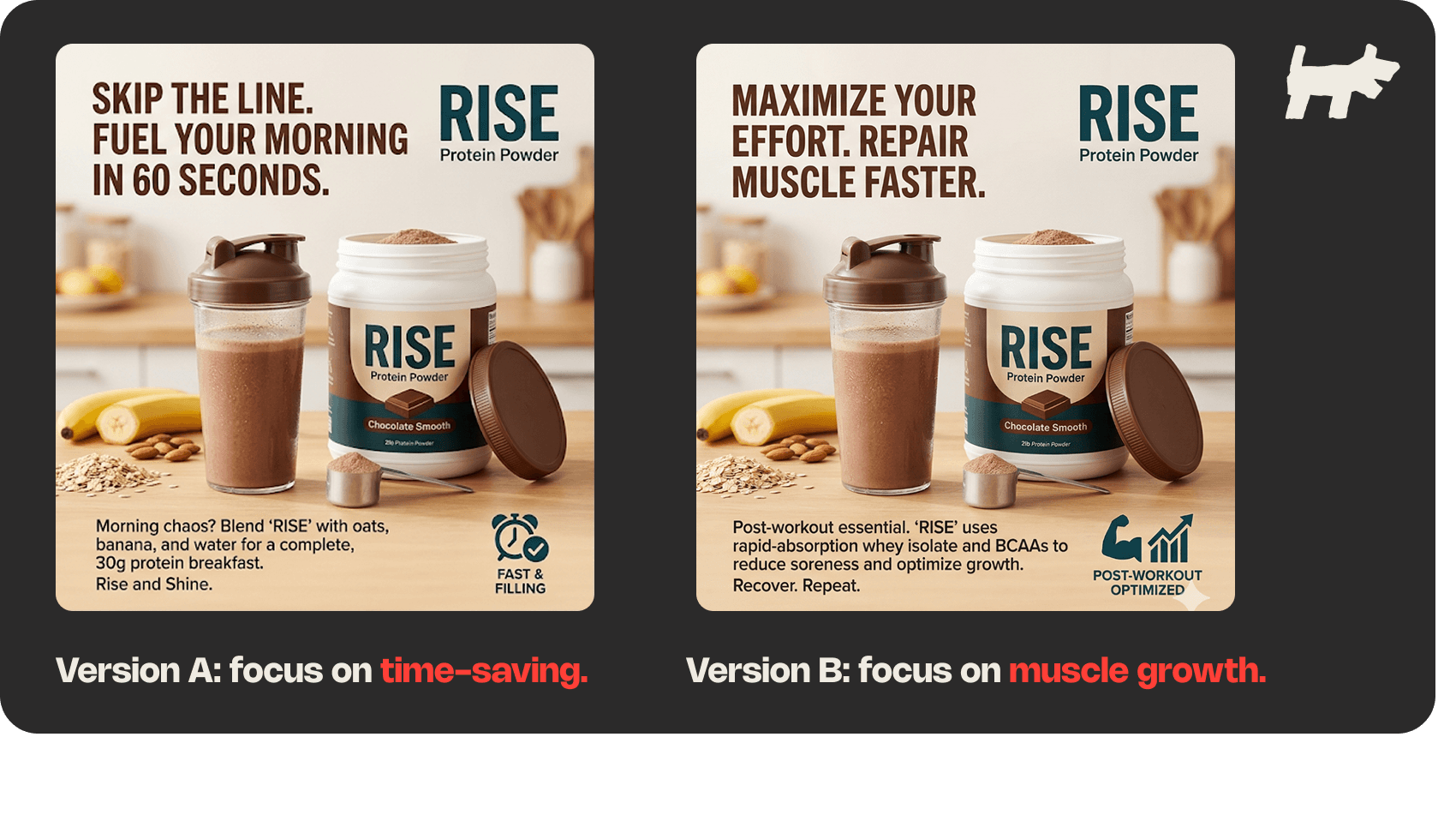
A/B testing (or split testing) is the operational core of growth marketing. You compare two versions of a marketing asset, measure performance side by side, keep what works, and cut what does not. Applied to email subject lines, landing page copy, ad creative, CTA placement, or onboarding flows.
The growth marketing version of A/B testing goes further than most because of audience segmentation. Rather than testing on your full audience, you test within specific segments: demographics, purchase history, behavioral triggers. Each test narrows the gap between what you think your audience wants and what you can prove they respond to.
Use cross-channel marketing with intent
Cross-channel marketing is not about being present everywhere. It is about creating a coherent journey across the channels your audience actually uses. Social ad to landing page to follow-up email. Each touchpoint should feel like a continuation of the last, not a disconnected message from a different brand.
The key is consistency of persona context. If someone arrives via a retargeting ad for a specific product category, the landing page and the follow-up sequence should reflect that context. Integration and experimentation across those channels is where growth marketing strategy produces results that traditional channel-by-channel thinking cannot.
For more on how attribution models help you understand which touchpoints in a cross-channel journey are actually driving conversions, the attribution models guide covers the mechanics in detail.
Tools that support growth marketing
Two categories of tools come up repeatedly in growth marketing stacks.
CRM and marketing automation
Hubspot is the most commonly referenced tool in this space. It handles inbound marketing automation, email campaigns, landing pages, and A/B testing from a single platform. More usefully for growth teams, it centralizes the customer data that makes personalization and segmentation possible at scale. Without a CRM anchoring the data layer, cross-channel experiments produce results that are difficult to attribute and impossible to systematize.
Behavioral analytics
CrazyEgg is a heat mapping tool that shows where visitors engage on a website: where they click, where they stop scrolling, where they abandon. For growth teams, this kind of behavioral data is the starting point for on-site experimentation. It turns a vague hypothesis ('our landing page is not converting') into a specific test ('visitors are not reaching the CTA because the page is too long').
These two tool categories do not cover every growth stack, but they represent the foundation: a place to hold customer data and a way to observe how customers actually behave. Everything else builds on top of that. For a data-driven framing of how to think about what your marketing is producing, the data-driven marketing guide is a useful companion read.
What growth marketing can do for your business
Companies that are not using growth marketing are competing against ones that are. The businesses running structured experimentation across segmented audiences, with data feeding every campaign iteration, are not just getting better results. They are getting cheaper results over time as their acquisition costs drop and their customer lifetime value rises.
Growth marketing is not a tool you buy or a campaign type you run. It is a way of operating. It requires a system: a defined customer lifecycle, a testing culture, cross-channel integration, and the data infrastructure to support all three.
The businesses that build that system compound their advantage every quarter. The ones that keep running the same seasonal campaigns and broad keyword buys plateau at the same place, spending more for the same results.
If you want to think about what a hyper-personalized version of this looks like in practice, the hyper-personalization guide covers how personalization at scale actually gets built.